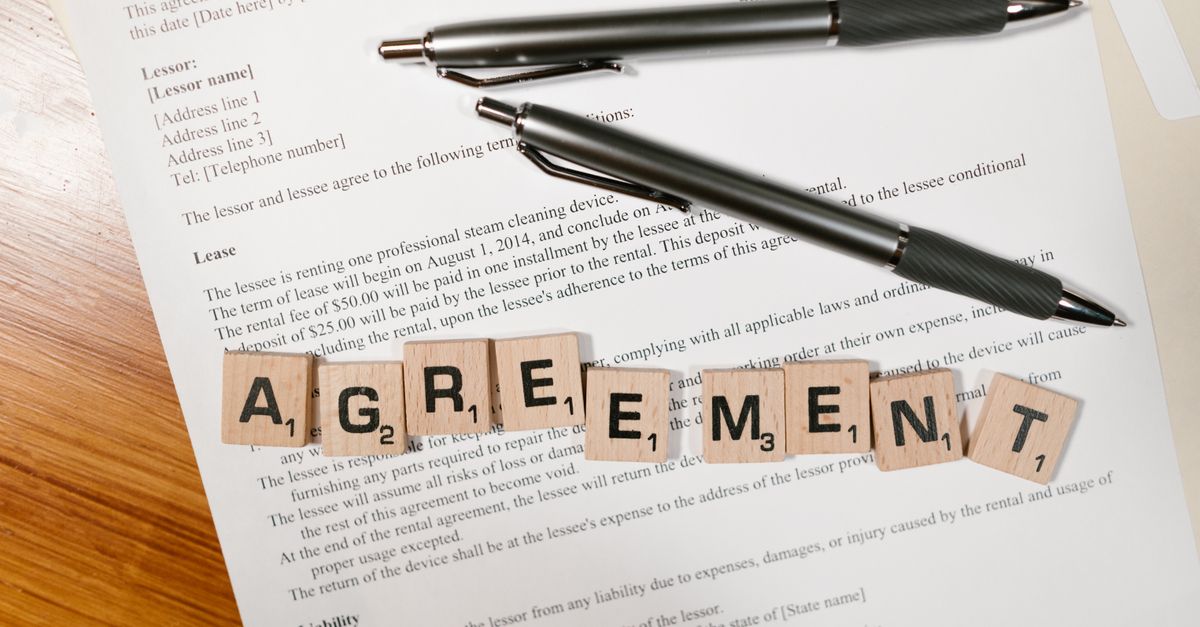
AIMA asks for proof of accommodation with every residence visa application. In most cases, that proof is the lease agreement, and when the lease was signed in another country, it has to enter the file in Portuguese, translated in a way the authority will actually accept. Without that piece, the application stalls even when every other document is in order.
This article covers what separates a plain translation from a certified one, which parts of a lease agreement cause the most problems, and how to avoid the mistakes that get a file sent back.
Why a plain translation is not enough
A lease agreement is not neutral text. It sets rent amounts, notice periods, guarantor obligations and termination clauses, often referencing local legislation that has no direct equivalent in Portuguese law. A translation done without legal grounding frequently distorts automatic renewal clauses or guarantee terms, and that raises questions for the officer reviewing the file.
AIMA and Portuguese consulates require the translation to come with a statement from the translator, a notary, or a chamber of commerce confirming that the translated text matches the original. That statement is what turns an ordinary translation into a certified one with administrative standing. A translation done by a bilingual acquaintance, however accurate, carries no such formal weight.
Certified, sworn and apostille: what applies to a lease agreement
These three terms get mixed up often, and each one solves a different problem:
- Certified translation: the translator or translation company signs a statement of fidelity to the original. This is the most common format accepted for lease agreements submitted to AIMA or Portuguese consulates.
- Sworn translation: Portugal has no separate legal status for "sworn translators" as some other European countries do. In practice, a certified translation with notarial or lawyer certification serves the same function.
- Apostille: this applies to the original document, not the translation. If the lease was signed abroad and the Portuguese authority requires proof that the original document itself is authentic, an apostille on the original may be needed before translation.
The exact requirement depends on the receiving authority. A Portuguese consulate might accept a straightforward certified translation, while AIMA might also ask for the apostille on the original, depending on the country where the lease was signed. The right move is to confirm the specific requirement with the office receiving the file, whether that is the consulate in the applicant's country of residence or the AIMA desk handling the application.
Anyone who has already had to translate other documents for the same application, such as an expatriate employment contract, will recognise that the same certification logic runs across the whole process.
Contract elements that need close attention
Certain parts of a lease agreement cause more translation problems than others:
- Party identification: names, tax numbers and addresses have to match exactly what appears on the identity documents submitted elsewhere in the application. A spelling mismatch on a name triggers a request for clarification.
- Term and renewal: automatic renewal, notice and termination clauses carry specific legal wording in each country, and a literal translation often misrepresents the actual duration of the lease.
- Rent amount and currency: when the lease is in a foreign currency, the translation should keep the original value and currency rather than converting it, to avoid creating inconsistency with the financial part of the application.
- Signatures and notarial acknowledgement: if the original carries notarial acknowledgement of the signatures, the translation needs to reflect that, including seals and stamps, not just the running text.
- Guarantor clauses: common in leases signed outside Portugal, these need precise legal terminology so a guarantor is not mistaken for a simple witness.
A mistake in any of these points usually costs more time than the translation itself. The file gets returned, the applicant has to resubmit the translated lease, and AIMA appointment slots in some districts already run weeks out.
How to prepare the lease before sending it for translation
Before requesting the translation, it helps to gather everything the receiving authority is likely to cross-check against the lease:
- Confirm whether the original needs an apostille before translation, which depends on the country where the lease was signed.
- Check whether AIMA or the consulate requires certification from a specific type of provider, or accepts any translator's statement of fidelity.
- Make sure the names of the parties in the lease are written exactly as they appear on the passport and the rest of the application documents.
- Send the complete lease, including any annexes, floor plans or inventories referenced in the text, since a partial translation is often rejected outright.
- Ask for a delivery timeline that fits the AIMA appointment date, given the current wait times in many districts.
How M21Global handles this type of case
M21Global has translated lease agreements for residence visa applications for over twenty years, under an ISO 17100:2015 certification that requires independent review of every legal translation. The company knows which certification format each authority accepts, whether that is AIMA, a Portuguese consulate abroad, or a chamber of commerce, and adjusts the fidelity statement to match.
For leases with more complex clauses, such as guarantees or references to foreign legislation, the legal translation team works alongside the reviewer to make sure the terminology reflects the actual legal effect of the clause, not just a literal rendering. This approach is set out on the legal translation services page and follows the same standard applied in legal translation services for contracts more broadly.
Request a quote from M21Global for the certified translation of your lease agreement and get a delivery estimate that fits your AIMA appointment date.
Related Services
Request a free legal translation quote
- Request a free legal translation quote
- Certified Legal Translation Services
- Sworn Translation For Court Documents
- Legal Translation Services For Contracts
Frequently Asked Questions
Does AIMA accept any translation of a lease agreement?
No. The translation must come with a statement of fidelity to the original, signed by a certified translator, notary or equivalent body, confirming that the translated text matches the original document.
Does the lease agreement need an apostille as well as a translation?
It depends on the country where the lease was signed and the specific requirement of the receiving authority. The apostille applies to the original document, not the translation, and should be confirmed with AIMA or the relevant consulate.
How long does a certified lease translation take?
Turnaround depends on the length of the lease and how complex the clauses are, but it is usually a matter of a few business days. It is worth ordering the translation with enough margin before the AIMA appointment date.
Can only the relevant sections of the lease be translated?
This is not advisable. Receiving authorities generally require the full lease to be translated, including any referenced annexes, and partial translations are a common reason for a file being returned.