
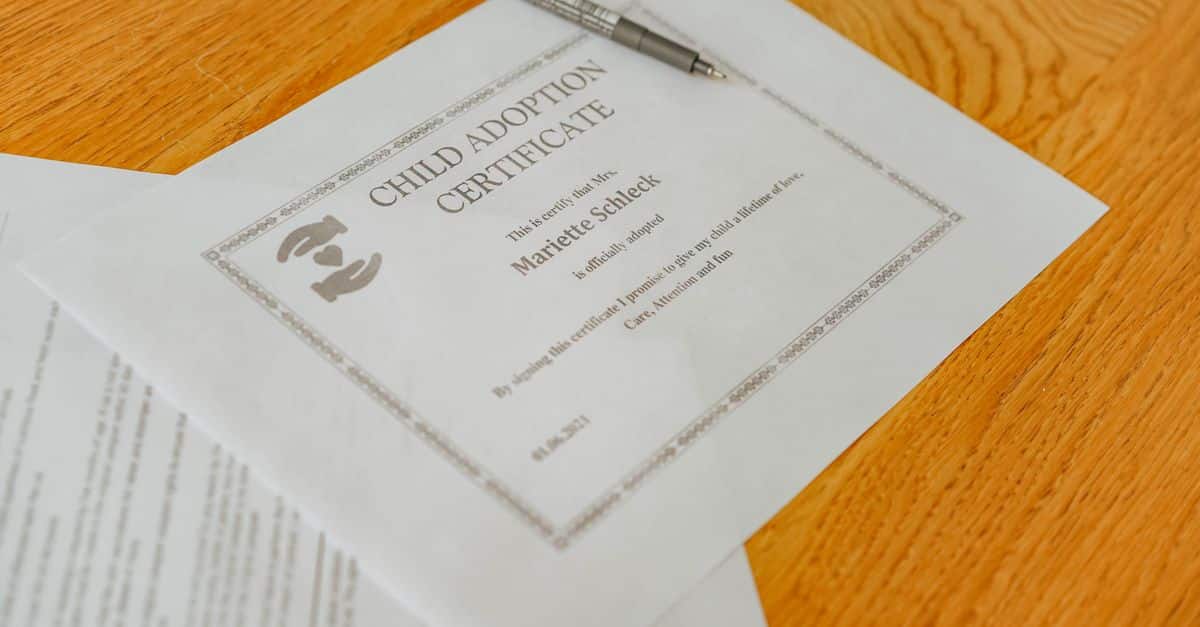
A company submits a foreign degree certificate to AIMA and gets it sent back with a request for further proof. A lawyer files a translated contract with a Portuguese court and the document is rejected for lack of certification. Both cases share the same root cause: someone assumed a plain translation would do when the receiving body required a certified one.
Portugal has no sworn translation system. The sworn translator model used in Brazil, Spain, France or Germany does not exist under Portuguese law. What Portugal has is certified translation: the translator declares before a lawyer registered with the Ordem dos Advogados, or before a notary, that the translation is faithful to the original, and both sign the certificate. It is this joint signature, not a sworn stamp, that gives the document legal standing in Portugal.
Which documents require certified translation
Portuguese public bodies and private institutions ask for certified translation whenever the document carries legal, administrative or evidentiary weight. The most common cases:
- Civil registry records: birth, marriage or death certificates issued abroad, for nationality, marriage or property registration processes
- Academic documents: diplomas and transcripts for degree recognition or public sector applications
- Corporate documents: commercial registry certificates, minutes, articles of association and powers of attorney for company incorporation or opening a bank account
- Court documents: contracts, judgments, powers of attorney and procedural filings for litigation
- Documents for AIMA: criminal record certificates, employment contracts and proof of residence for visa or residence permit applications
A plain translation, without certification, is suitable only for internal, informational use. It is not accepted by civil registries, courts, the Ordem dos Advogados, universities or AIMA.
Certified translation, apostille and legalisation: three separate steps
Certified translation attests to the linguistic fidelity of the text. The apostille or legalisation attests to the authenticity of the original document, and these are separate steps that may be required before or after translation, depending on the country of origin and destination.
If the document comes from a country party to the Hague Apostille Convention and is destined for another party country, the apostille is sufficient. In Portugal, the apostille is issued exclusively by the Procuradoria-Geral da República (PGR), for any type of document, whether civil, academic, judicial or commercial.
If the document is destined for a country outside the Convention, the process is longer: legalisation by the Ministry of Foreign Affairs (MNE), followed by the destination country's embassy or consulate. The apostille has no role in that chain.
Documents destined for Angola need particular care. Angola is not a party to the Hague Apostille Convention, unlike many other Portuguese-speaking countries. A Portuguese document for use in Angola follows classic consular legalisation: authentication by the MNE, then legalisation at the Angolan consulate in Portugal. An apostille has no effect in that case.
Common mistakes that delay the process
The costliest mistake is rarely the absence of a translation. It is getting the order of steps wrong. A company that translates a document before apostilling it, or that apostilles the translation instead of the original, often has to start the whole process again. Always confirm with the receiving body, whether the civil registry, the court or the destination university, whether certification and the apostille must apply to the original, to the translation, or to both.
Another recurring mistake is asking for "sworn" translation into or from Portuguese for use in Portugal, confusing the Portuguese regime with that of Spain or Brazil. A Portuguese translator does not take an oath. What secures legal validity is certification by a lawyer or notary, followed, where needed, by the PGR's apostille.
How M21Global handles these cases
M21Global has provided certified legal translation services for over 20 years, with ISO 17100:2015 certification audited by Bureau Veritas. For contracts, powers of attorney and documents going to court, the company recommends the Estratégica tier, which involves three linguists (translator, reviewer and QA reviewer), a workflow audited against ISO 17100, and a dedicated project manager. It is the only tier with review by a second linguist, built for content where legal accuracy carries real weight, including sworn translation for court documents and other filings.
The team also regularly handles certified legal translation requests tied to apostille and consular legalisation chains, depending on the originating and destination country. Request a quote from M21Global and get a response within three business hours, with a clear outline of the certification and legalisation steps that apply to your case.
Related Services
Request a free legal translation quote
- Request a free legal translation quote
- Certified Legal Translation Services
- Sworn Translation For Court Documents
- Legal Translation Services For Contracts
Frequently Asked Questions
Is there sworn translation in Portugal?
No. Portugal has no sworn translator system. Legal validity comes from certified translation, where the translator declares before a lawyer or notary that the translation is faithful to the original, and both sign the certificate.
Who issues the apostille in Portugal?
The apostille is issued by the Procuradoria-Geral da República (PGR), for any type of document, whether civil, academic, judicial or commercial.
Are certified translation and apostille the same thing?
No. Certified translation attests to the accuracy of the translation against the original text. The apostille attests to the authenticity of the original document for use in another Hague Convention country. They are separate, sometimes sequential, steps.
Do documents for Angola need an apostille?
No. Angola is not a party to the Hague Apostille Convention. Portuguese documents destined for Angola follow classic consular legalisation, with authentication by the MNE and legalisation at the Angolan consulate.
When is a plain translation not enough?
Whenever the document is submitted to a public body or carries legal weight, such as civil registry records, academic documents, corporate filings or court documents. In those cases, certified translation is required, not a plain translation.